 Tessera
Days add up to a routinepicture
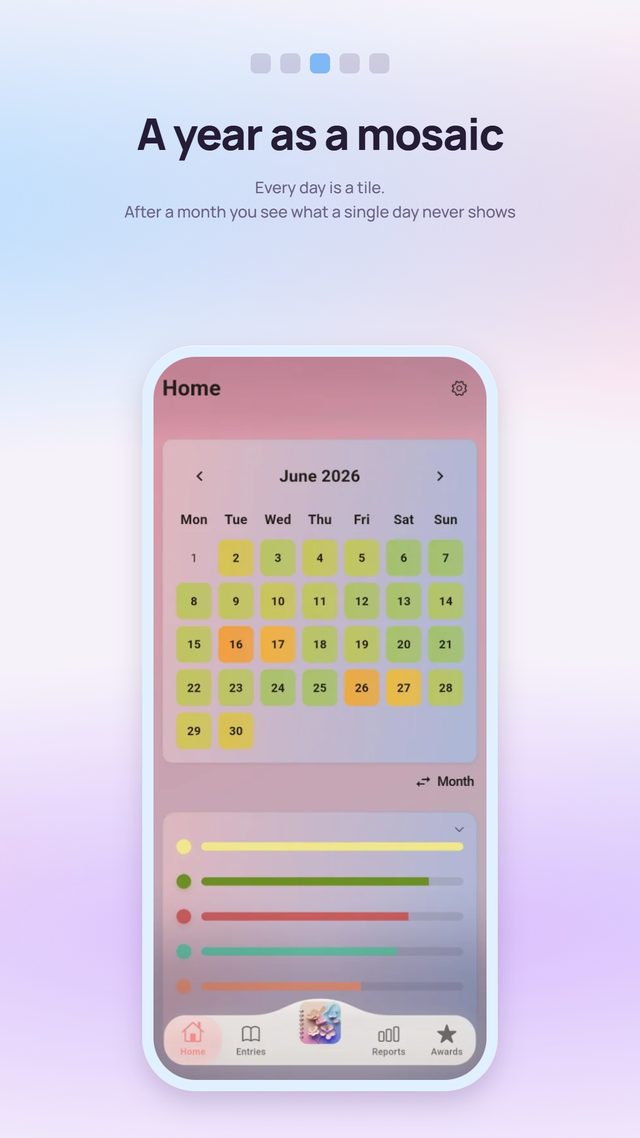
A tessera is a single tile of a mosaic. One evening on its own is not remembered, but a hundred of them start to show a pattern: why some days come easily and others do not.
There is nothing to keep up. The app asks, you answer, and the day is closed. A minute, no longer.


You have probably tried this before
And given up. That is normal: in the evening a diary turns into one more thing to remember, and it loses to everything else.
- A week goes by and there is nothing to recall but work.
- The paper journal made it to Thursday.
- The app with streaks and “don’t break the chain” lasted nine days.
- You genuinely wonder why one day turns out light and another heavy, when from the outside they look the same.
- And you would rather your phone did not lecture you.
Then we are talking about the same thing.

Not a task for tomorrow, and not a habit to keep up. A minute today — and the day is closed.
A diary usually loses to the schedule rather than to laziness: it wants time that the evening does not have. Here the app asks the question, and answering half of it still counts as an entry.
Five cards, and it is clear what this does
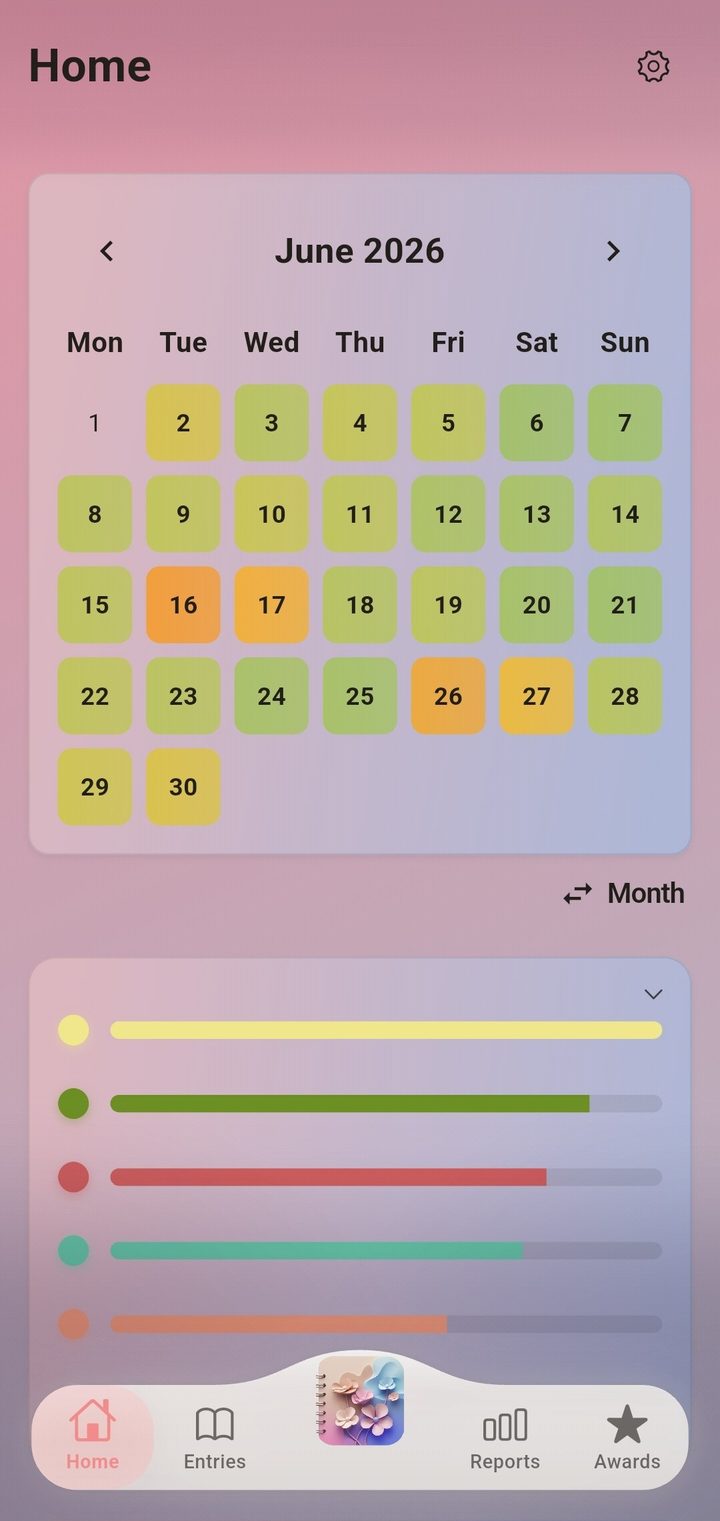
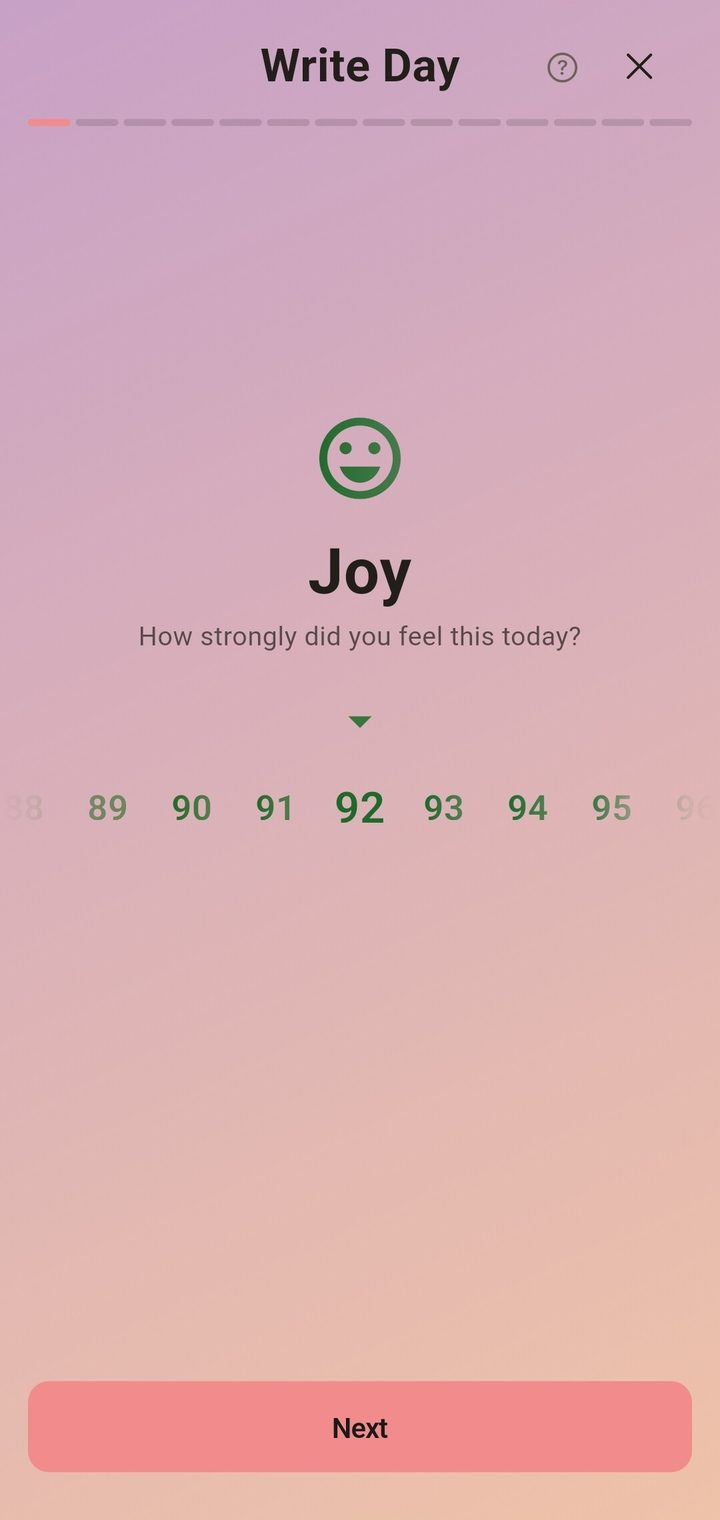
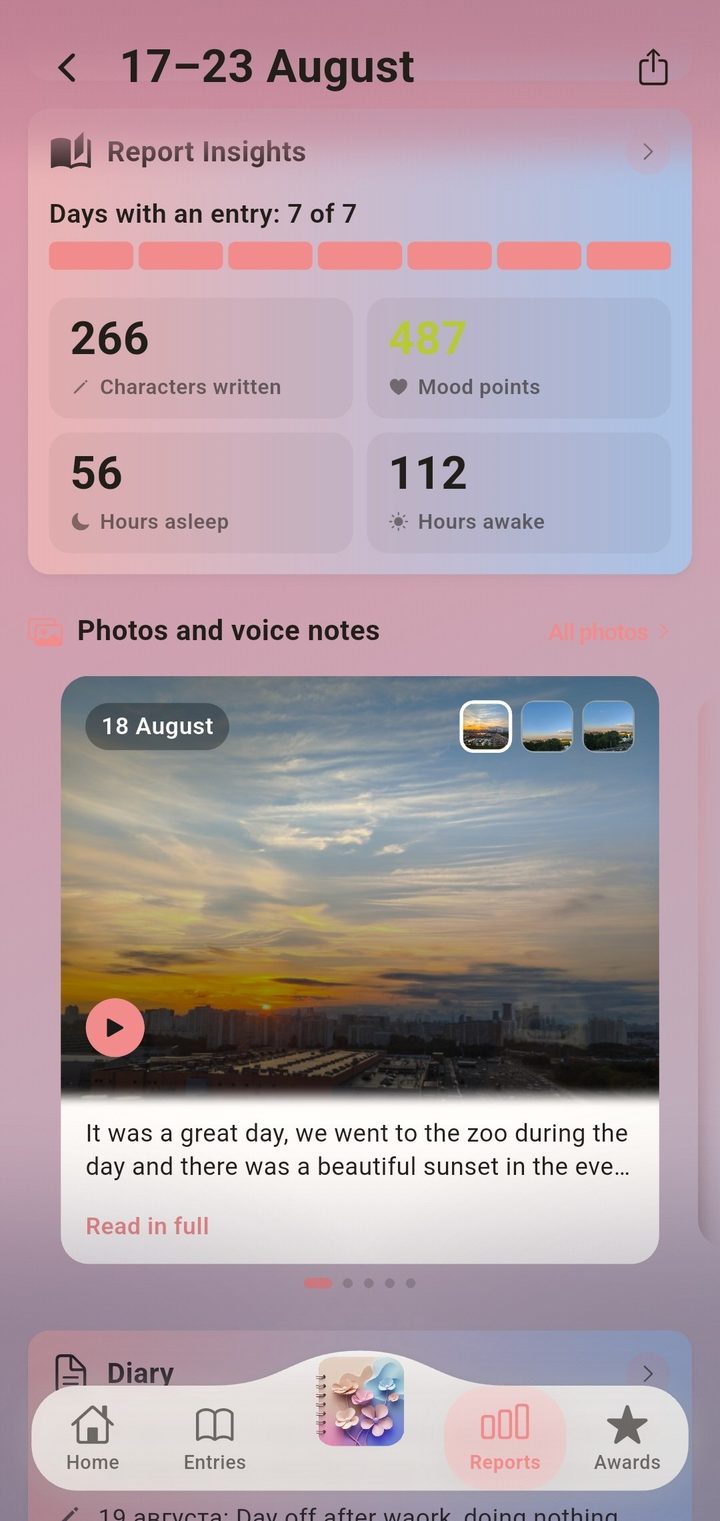
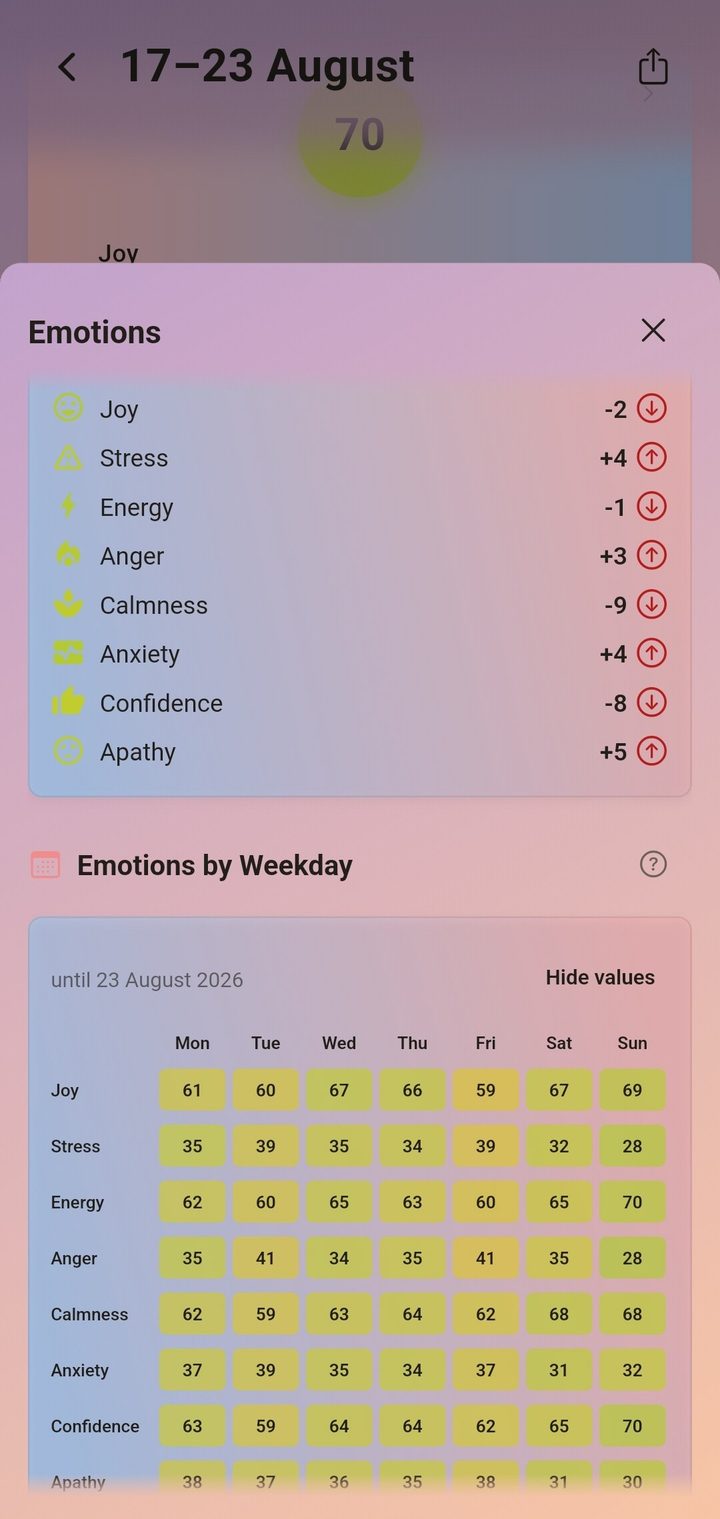
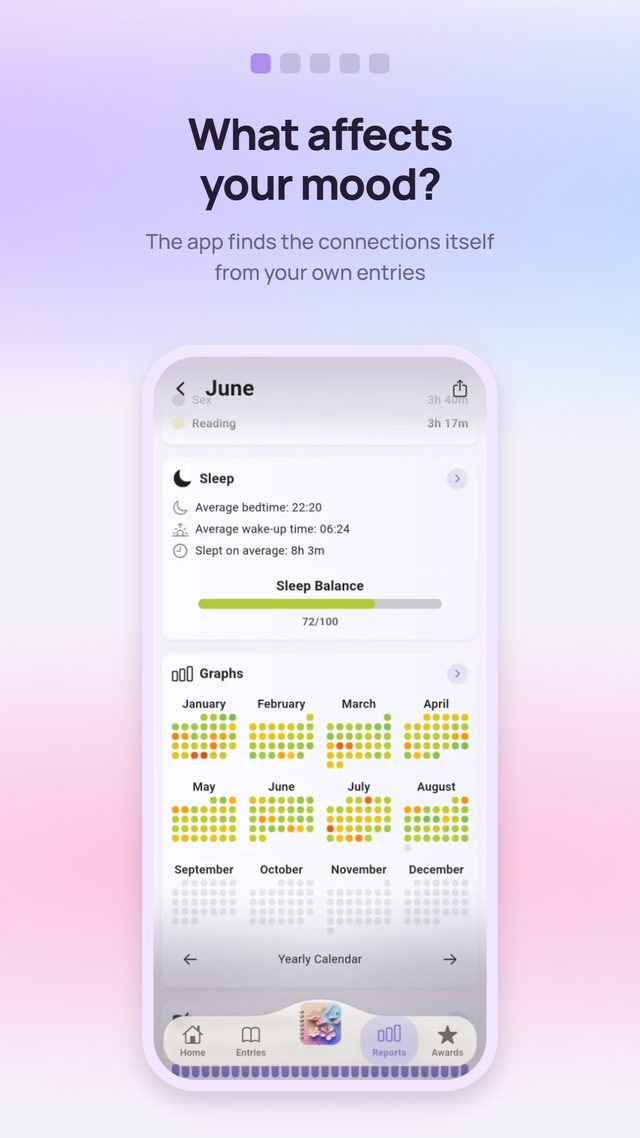
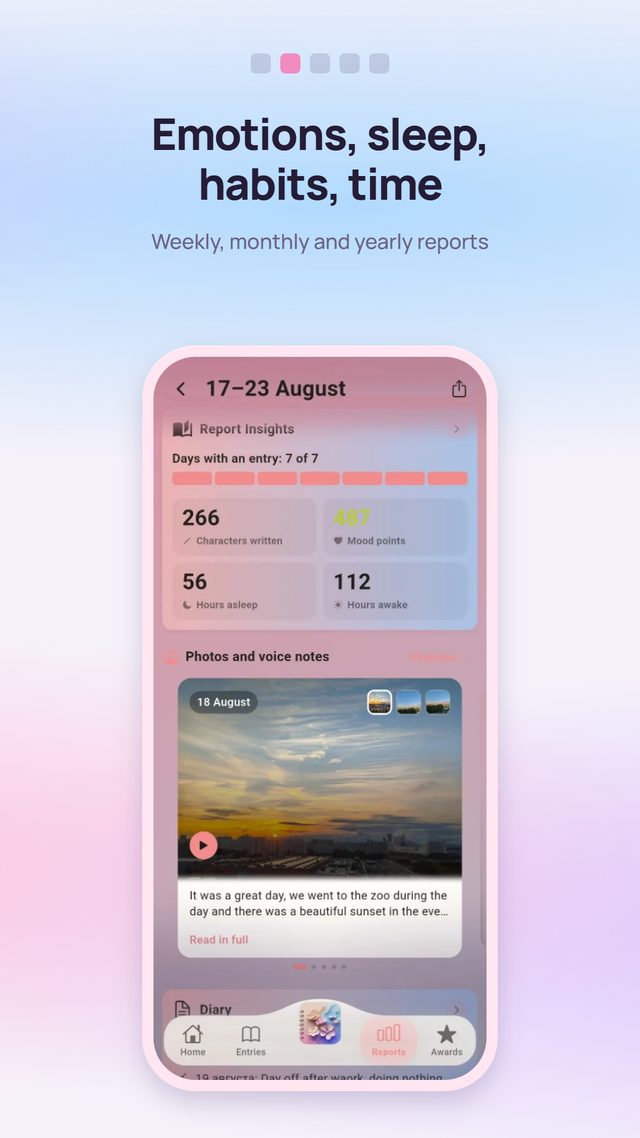
Left to right: how an evening is written down, what it shows, and what a year of it adds up to.
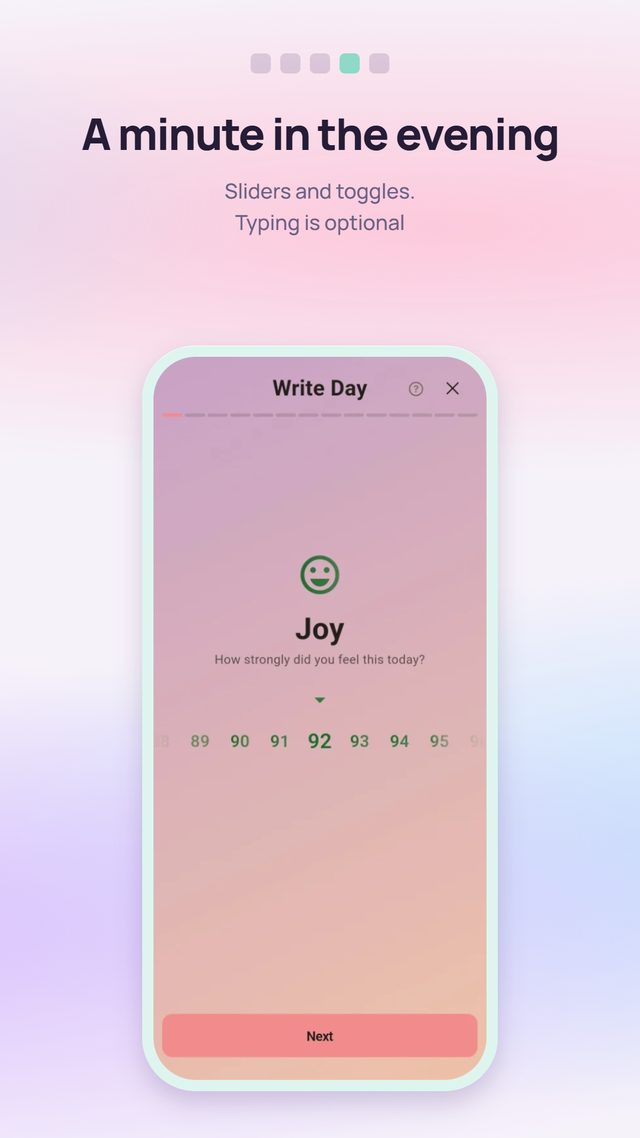
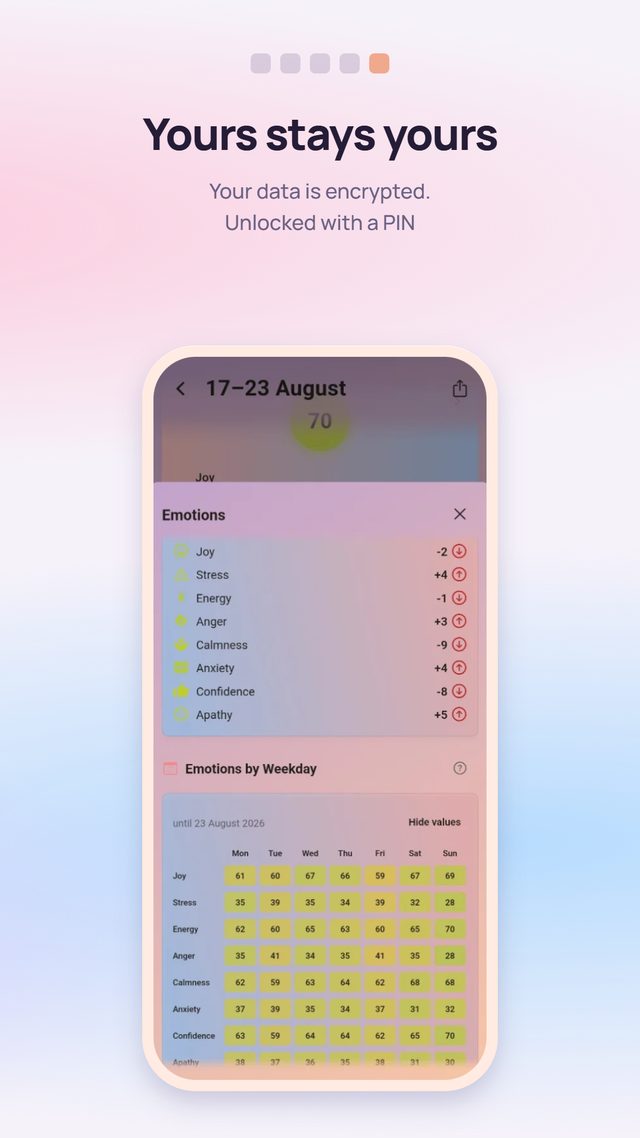
An evening that finally ends with something
There is nothing to keep up. The app asks, you answer, and the day is closed. It does not take longer than a minute, not even the first time.
Eight questions and a couple of lines
How today felt, when you went to bed, which habits worked out, where the day went. Nothing is required: answer half of it and save, and it still counts as an entry.
What numbers cannot hold
A line in words, a voice note on the move, a photo of the day. Six months later this is the part worth rereading, not the ratings.
Nothing burns down
No streaks, no counter of missed days. Reminders stay quiet, and any of them can be turned off. Back after a week? You just write down today.
And then it gets interesting
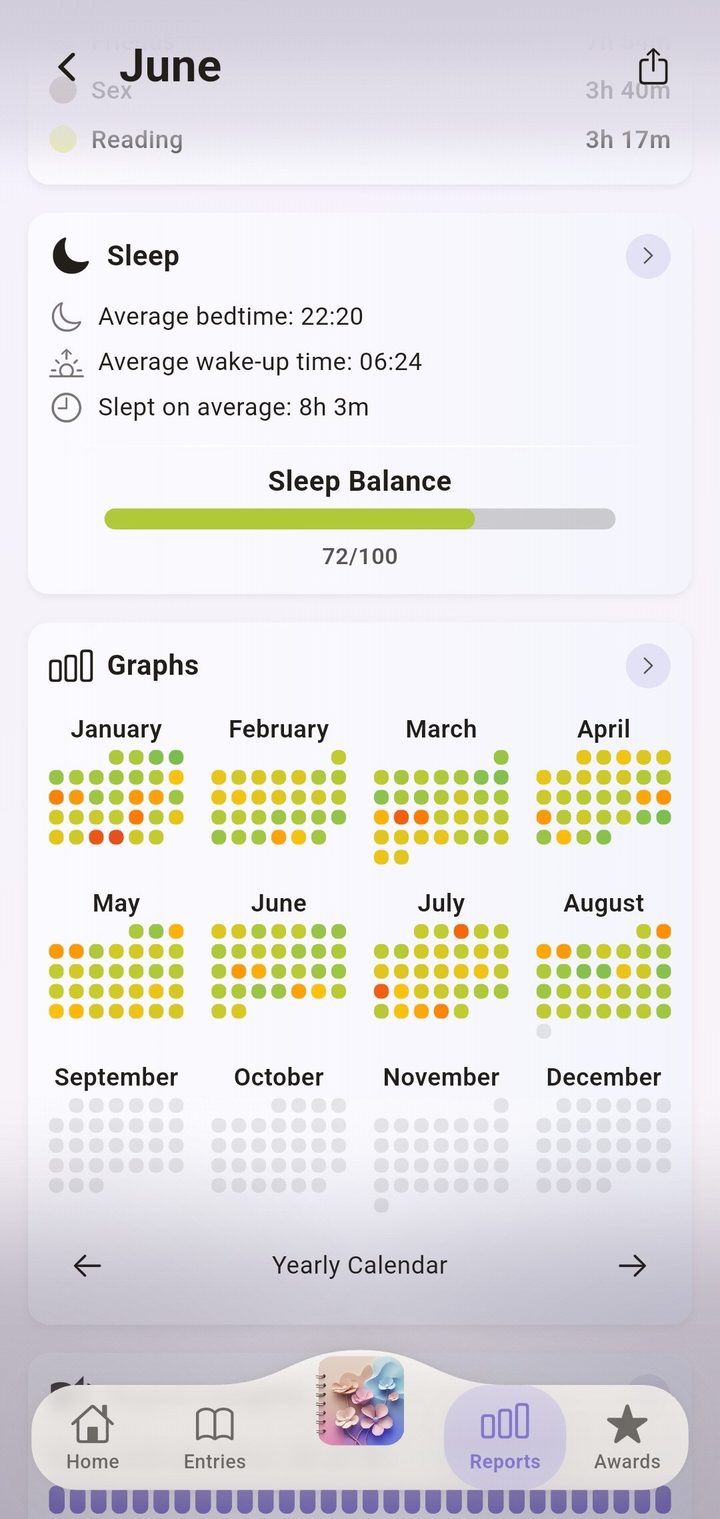
A minute a day is worth nothing on its own. What it adds up to is worth something: reports appear by themselves at the end of the week, the month and the year.
Not ratings, but links
How sleep lands on the next day. What changes in the weeks a habit held. Where time actually goes when you add it up across a month instead of judging by feel.
The best and worst day of the month
Along with what came before them. Usually not the days you would name from memory, which is exactly why the report is worth opening.
Marks for what is already done
Awards come for what you have lived, not for what you must manage. None of them is taken away and none of them hurries you.
When you want to go deeper
The diary, habits, statistics and every report — the analyses and the shareable cards included — are free and will stay that way. The full version is about something else: what you can add to an entry, where the backup lives and how all of it looks.
An encrypted cloud copy
Encrypted on the phone. Years of diary will not be lost along with the phone, and we cannot read the copy either.
Voice, photos and the rest
Voice notes and photos in a day, a diary on paper — the days you need in one PDF, habits without a cap, your own areas of life, a lock on the app, seven appearance sets.
A diary that answers to no one
No email, no sign-up, no phone number. We do not know who you are and we do not keep an account for you: entries live in the phone’s memory and do not leave it on their own.
This is not only about privacy. A diary someone else can see gets written differently: more carefully, more decently, and therefore more uselessly. Here nobody is watching, so you can write as it is.
You can export a copy to a file and put it wherever you see fit. The cloud copy is encrypted on the phone before it is sent: what reaches the server is a bag of bytes, and the key stays with you. We cannot read your copy — that is how it is built, not a promise we make.
Start tonight
In a week there will be a first report. In a month you will learn something about yourself you did not suspect. It costs a minute a day.